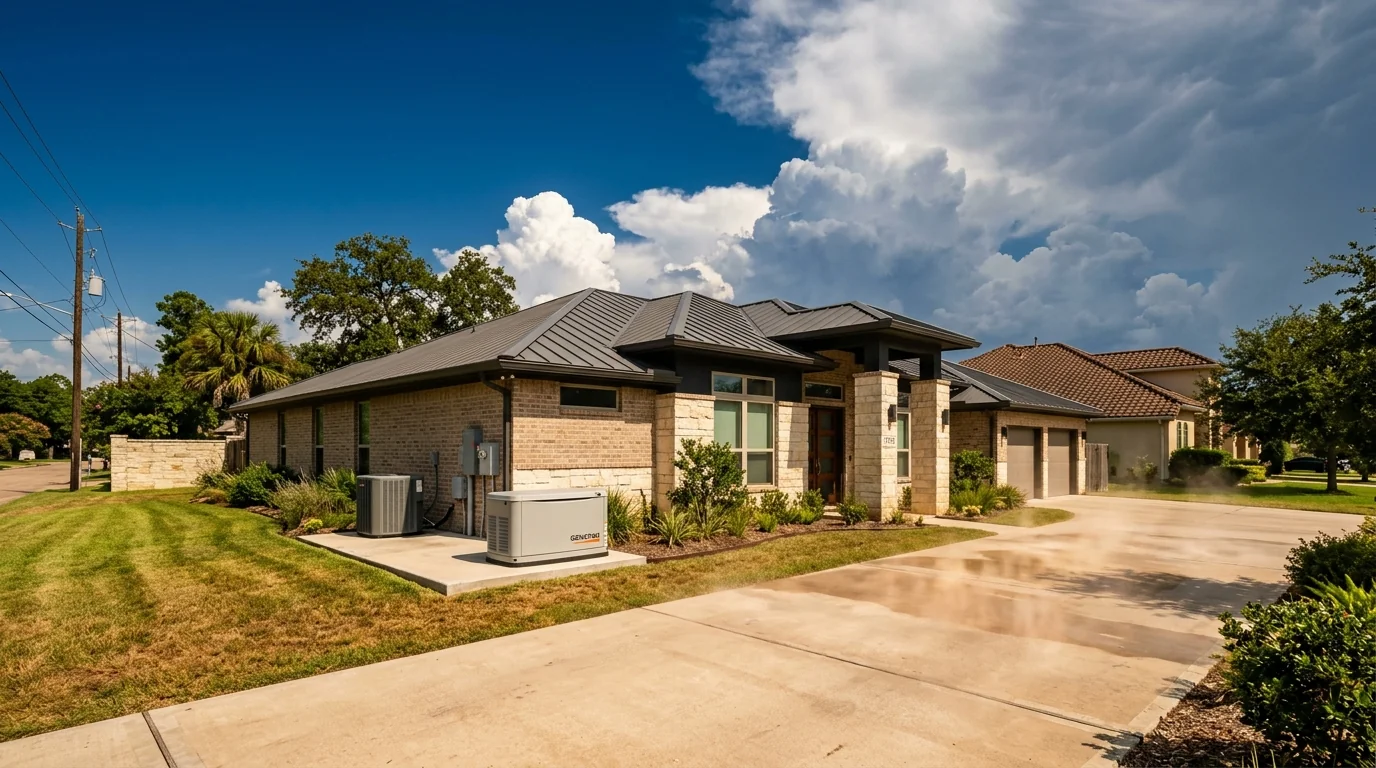
Natural Gas vs Propane for Your Generac Standby Generator: Which Fuel Is Right for a Houston, TX Home?
You’ve decided a Generac whole-home standby generator is the right call for your Houston, Conroe, or Woodlands property — smart move heading into hurricane season. The next question every homeowner asks: natural gas or propane?
It’s not a small decision. Fuel choice affects your install cost, your monthly cost of ownership, your runtime during a multi-day outage, and your reliability during a Gulf Coast weather event. This guide walks through both options with the trade-offs specific to the Greater Houston Area — not generic advice from a national retailer.
In this article
1. The quick answer for most Houston homes
If your home already has a natural gas meter and service line (true for the vast majority of homes in Houston, Spring, The Woodlands, Kingwood, Tomball, Cypress, and Humble), natural gas is almost always the right choice. It’s cheaper to run, requires no on-site fuel storage, and provides essentially unlimited runtime as long as your gas utility is delivering pressure.
Propane is the correct choice when:
- Your property doesn't have a natural gas line (common in rural Cut and Shoot, parts of Willis, some acreage properties in Montgomery County).
- Extending a gas line is prohibitively expensive.
- You already have a propane system for cooking, water heating, or a pool heater.
- You want fuel completely under your own control — a legitimate concern for some homeowners after Winter Storm Uri.
Rule of thumb
Have a gas meter? Choose natural gas.
No gas line? Choose propane.
Both available? Choose natural gas for cost, propane for absolute independence.
2. How each fuel works with a Generac
Natural gas (NG)
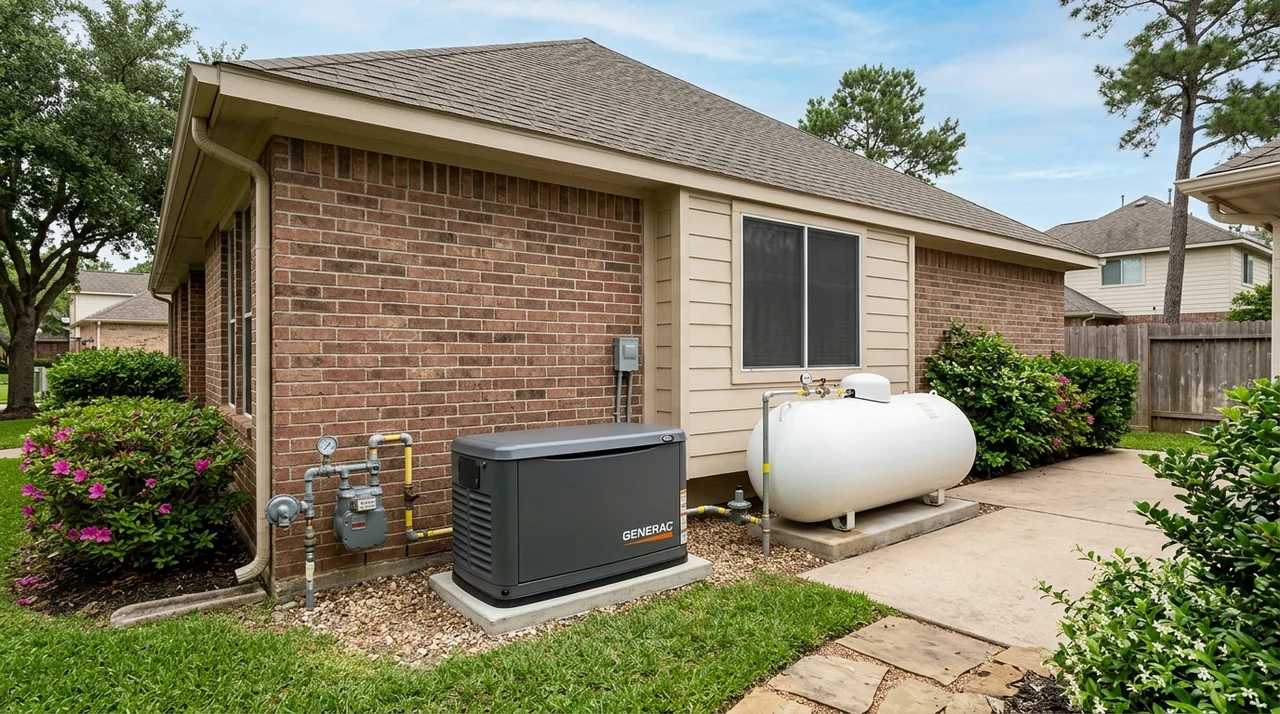
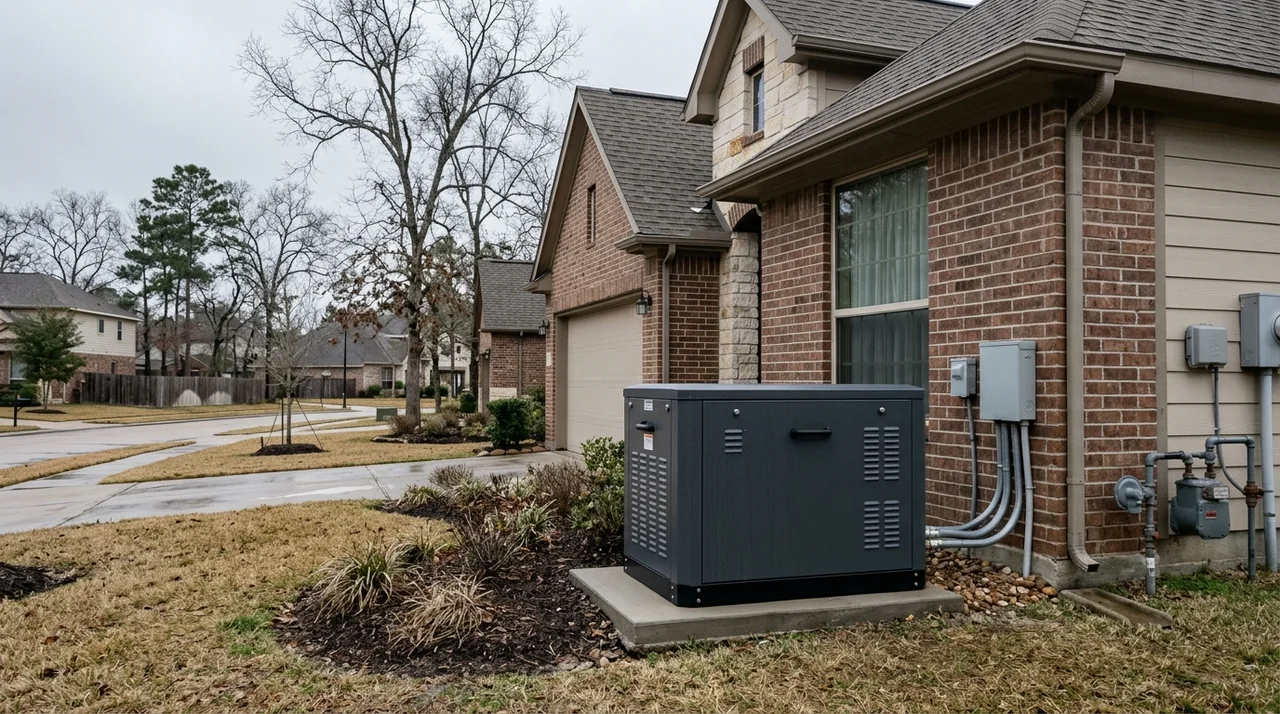
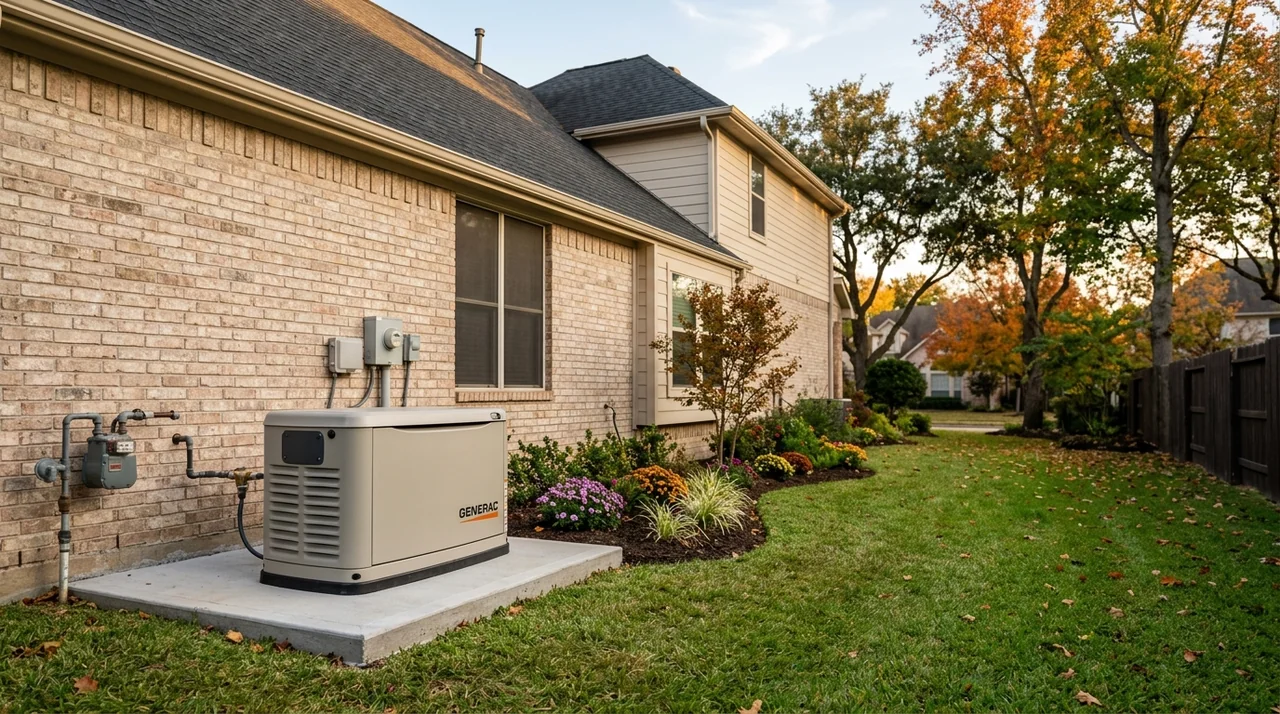
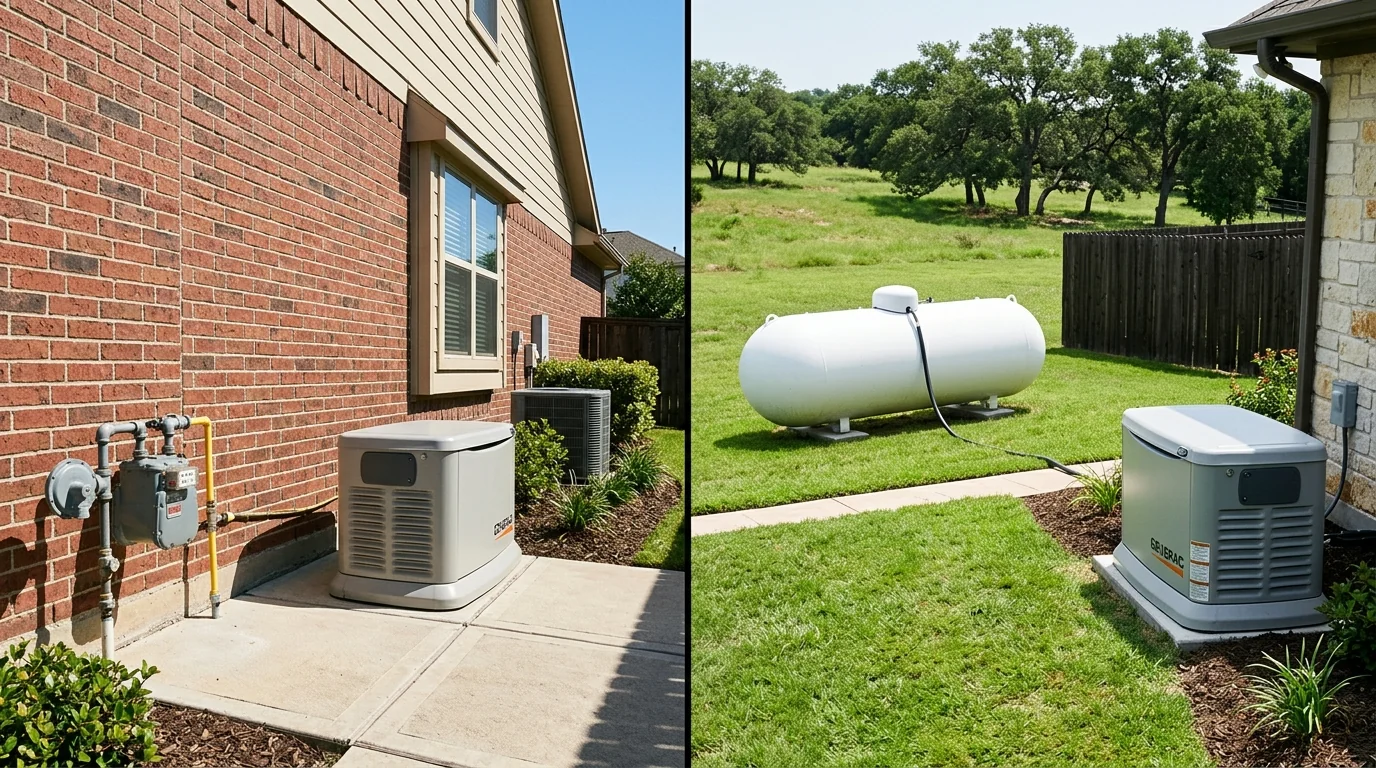
Natural gas is piped in from your local utility (CenterPoint, Texas Gas Service, etc.) through the meter that already serves your furnace, water heater, or stove. During installation, a certified technician runs a dedicated line from the meter to the generator pad. Generac units are field-set to natural gas at the factory or by the installer.
Liquid propane (LP)
Propane is stored on your property in an above-ground or buried tank. Common residential sizes are 250, 500, and 1,000 gallons. A regulator drops tank pressure to the generator’s required inlet pressure, and a vapor line feeds the unit.
Generac home standby generators are dual-fuel capable at installation — a certified installer converts the fuel jet at commissioning. Generac explicitly recommends against homeowners switching fuel types back and forth after install.
For a broader look at which Generac model fits your home, review our Whole Home Generator Sizing Guide and the Air-Cooled vs. Liquid-Cooled Generators comparison.
3. Side-by-side comparison
| Factor | Natural Gas | Propane |
|---|---|---|
| Runtime | Effectively unlimited | Limited by tank size |
| On-site storage | None | 250 – 1,000 gal tank |
| Install cost impact | Lower (uses existing utility) | Higher (tank + regulator + plumbing) |
| Cost per hour | $1.50 – $2.50 / hr @ 50% load* | $4 – $8 / hr @ 50% load* |
| Fuel shelf life | N/A (continuous supply) | Indefinite in sealed tank |
| Peak power output | Slightly lower | Slightly higher (more BTU/cu ft) |
| Hurricane resilience | High (buried lines) | Very high (on-site tank) |
| Freeze / Uri-style event | Vulnerable to utility pressure drop | Independent of utility |
| Maintenance | Standard Generac schedule | Standard + tank/regulator checks |
| Best for | Suburban Houston-area homes with gas service | Rural properties, gas-line-free homes, off-grid preference |
*Approximate 2026 Texas retail rates for a 22 kW unit running at 50% load. Your actual costs depend on utility rate, tank fill price, and load profile.
4. Reliability during hurricanes and grid events
This is where the trade-off gets real for the Gulf Coast.
During a hurricane (Beryl, Ike, Harvey pattern)
Natural gas lines in the Houston area are buried underground. Wind, downed poles, and even storm surge rarely affect them. Gas service typically stays online for the entire outage. The exception is severe flooding that damages regulators or forces the utility to depressurize a neighborhood as a safety measure.
Propane tanks are on your property. As long as the tank was filled before the storm and the regulator is functional, you’re independent of every utility. Above-ground tanks in flood-prone areas need to be properly anchored per NFPA 58 (Action Generator handles this at install).
During a summer ERCOT event
Neither fuel is affected by an electric-grid outage. Both keep your Generac running normally. See our related read: Texas Summer Heatwaves & ERCOT Grid Alerts.
During a winter freeze (Uri-style)
This is the one scenario where propane has a real advantage. During Winter Storm Uri in February 2021, some natural gas utilities experienced pressure drops when demand spiked and gas processing plants lost power themselves. Homeowners with propane tanks continued running normally.
The counter-argument: natural gas has historically been extremely reliable in Texas summers, which is when most Houston-area outages actually happen. Choose based on the risk you’re most worried about. Our post Extreme Weather Preparedness covers this in depth.
5. Real cost breakdown, install & runtime
Install cost delta
For a typical 22 kW Generac in the Houston area, the install portion related to fuel usually breaks down like this:
- Natural gas connection: $600 – $1,800 depending on distance from meter and whether meter upgrade is needed.
- Propane new install: $2,500 – $6,000+ including 500-gallon tank, regulator, plumbing, and permit.
- Propane using an existing tank: $400 – $1,200 for regulator, tie-in, and safety inspection.
For a full breakdown including gas meter and load management costs, see Generac Installation: Gas Meter & Load Management Cost Breakdown. There’s a companion piece worth reading, What Are the Hidden Costs of a Whole Home Standby Generator Installation.
Runtime cost
A 22 kW Generac running at 50% load consumes roughly:
- Natural gas: ~200 cubic feet / hour
- Propane: ~2.1 gallons / hour
At current Texas retail rates, that’s approximately $1.50–$2.50/hr on natural gas vs $4–$8/hr on propane. Over a 72-hour outage that’s the difference between about $150 and about $450. Over multiple outages per year, the natural gas savings pay back the higher up-front cost of propane installation for most homeowners.
Propane tank sizing for outage duration
| Tank size | Approx runtime (22 kW @ 50% load) |
|---|---|
| 250 gal | 2 – 3 days |
| 500 gal | 5 – 7 days |
| 1,000 gal | 10 – 14 days |
Note: usable tank capacity is roughly 80% of stated size.
6. How to choose — decision framework
Answer these four questions:
- Do I already have a natural gas line? If yes, that's usually your answer. Extending or upgrading a meter is cheap compared to installing a new propane system.
- What outage am I most worried about? Hurricane / summer thunderstorm → either fuel works. Winter freeze / Uri repeat → propane has an edge.
- How rural is my property? Homes in Cut and Shoot, parts of Willis, and outer Montgomery County frequently don't have gas service. Propane is the practical choice.
- Do I already own a propane tank? If yes, adding a generator connection is inexpensive. Stick with propane.
Once you’ve decided, our team handles the entire process — sizing, permits, gas or propane connection, install, and commissioning. Learn more on our Generator Sales & Service page or your local install page: Houston, The Woodlands, Spring, Conroe, Kingwood, Humble, or Tomball.
Not sure which fuel is right?
Book a free on-site fuel & sizing assessment
A licensed Action Generator technician will walk your property, check gas service, and give you a straight recommendation.
7. Frequently Asked Questions (People Also Ask)
Is natural gas or propane better for a Generac standby generator in Houston?
For most Houston-area homes with an existing gas meter, natural gas is the better choice: no tank, no refills, and effectively unlimited runtime. Propane is the better choice for homes without a gas line, rural properties, or homeowners who want on-site fuel independent of the utility.
Does a natural gas generator keep working during a hurricane?
In most Gulf Coast hurricanes, natural gas service continues without interruption because gas lines are buried underground and unaffected by wind or downed poles. Rare exceptions occur when severe flooding damages regulators or a gas utility depressurizes a segment for safety.
How big of a propane tank do I need for a whole home Generac generator?
For a 22 kW Generac at 50% load, a 500-gallon tank supports approximately 5 to 7 days of continuous operation. A 1,000-gallon tank supports about 10 to 14 days. We size the tank against your expected outage duration and household load.
Is a propane generator more expensive to run than a natural gas generator?
Yes. Per hour of runtime, propane typically costs 2 to 4 times more than natural gas in Texas. Propane produces slightly more BTUs per cubic foot, so a propane-fueled Generac can deliver slightly higher peak output than the same model running on natural gas.
Can a Generac generator switch between natural gas and propane?
Most Generac home standby models are field-convertible between natural gas and propane at the time of installation. Generac does not recommend switching fuel sources back and forth as a routine practice; the fuel choice should be set at install by a certified technician.
Do I need a permit to install a propane tank in Harris or Montgomery County?
Yes. Most Houston-area jurisdictions require a mechanical permit for propane tanks larger than 125 gallons, plus HOA approval where applicable. Action Generator handles the permitting and NFPA 58 placement requirements as part of every propane install.
Keep reading
- Whole Home Generator Sizing Guide: How to Choose the Right Generator
- How Much Does a Generac Home Standby Generator Cost in Conroe, TX?
- Hurricane Season Preparation: Why Houston Families Need Standby Generators
- Why Standby Generators Must Be Placed 5 Feet From Openings and 10 Feet From Property Lines
- Hurricane Preparedness Checklist
Ready to lock in reliable backup power?
Published July 23, 2026 by Action Generator — Generac Whole-Home Standby Generator Sales, Installation, Repair, and Maintenance for the Greater Houston Area. Call 936.271.1331 or email [email protected].