Imagine waking up to a quiet house with no hum of your refrigerator, no lights in the kitchen, and no Wi-Fi for your home office. A sudden power outage can disrupt more than just comfort—it can affect safety, food preservation, and work routines. If this scenario has you asking, “What size generator do I need for my house?” you’re in the right place. Understanding your power needs is the first step to making an informed choice that keeps your home running during outages.
The right generator isn’t necessarily the biggest or the most expensive. It’s the one that fits your home’s electrical demands while staying efficient and reliable. Over- or undersizing can create problems, but with a thoughtful approach, you can avoid both.
Start by Thinking About What You Actually Need Powered
Before getting into wattages or brands, start by identifying the systems and appliances that matter most during an outage. Make a list of essentials first, then add optional comfort items. This approach ensures your generator is sized appropriately and avoids unnecessary costs.
What Size Generator Do I Need for My House?
Here’s a practical guide to common ranges:
- Small Emergency Coverage (5,000–10,000 watts)
Enough for essentials like:- Refrigerator
- Freezer
- Some lighting
- Internet/router
- TV
- Microwave
- Small appliances
- Phone charging
- Mid-Range Backup (10,000–20,000 watts)
Can handle more appliances and systems, such as:- Refrigerator and freezer
- Lighting throughout much of the house
- Microwave and dishwasher
- Garage door opener
- Home office equipment
- Some HVAC loads
- Full Home Backup (20,000+ watts)
Supports most or all of your home systems, including:- Central air conditioning
- Electric water heater
- Kitchen appliances
- Washer and dryer
- Multiple TVs
- Internet and home office
- Security systems
- Pool equipment in some cases
Why Appliance Demand Matters More Than Home Size
Many homeowners assume generator size depends mostly on square footage. While home size matters slightly, the real factor is your appliance and system demand. A smaller home with electric heating and multiple appliances may need a larger generator than a bigger home with gas heating and fewer electrical devices. Focusing on your actual usage gives a far more accurate sizing estimate.
Understanding Starting Power vs Running Power
Some appliances require a power surge at startup. Refrigerators, air conditioners, pumps, and compressors all need extra energy when they first start. If your generator is sized only for running load, it may struggle with these short bursts. Accounting for both running and starting watts ensures your generator performs reliably when needed.
Fuel Type Considerations
Fuel choice also affects generator performance and runtime:
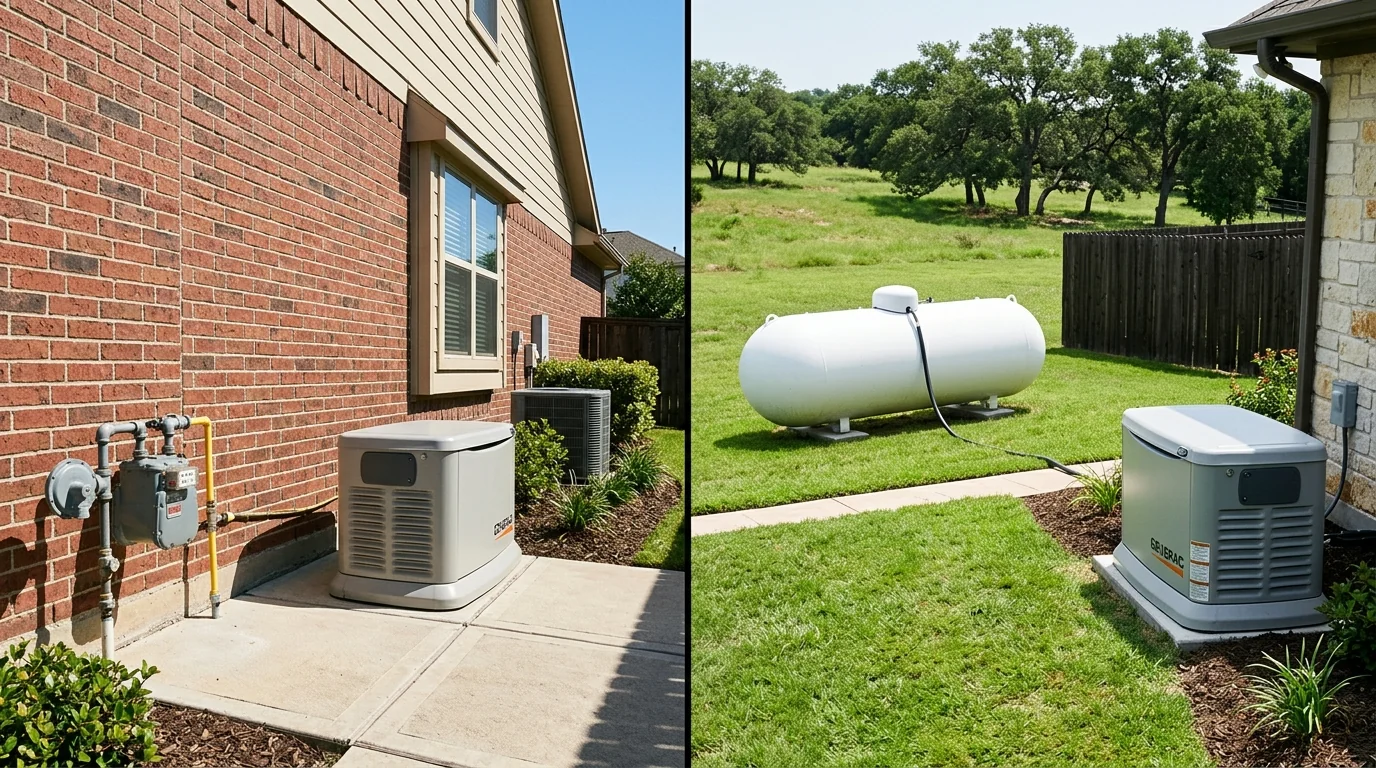
- Natural Gas – Convenient for homes with an existing gas line; provides continuous fuel without on-site storage.
- Propane – Reliable for backup storage; tank size determines how long the generator can run.
- Diesel – Strong performance; typically used for larger or commercial applications.
Fuel type won’t change wattage requirements, but does influence efficiency, cost, and convenience.
Common Questions Homeowners Ask
- Do I want essentials only or full-home coverage?
- Will central AC need to run?
- Is my water heater electric?
- Do I have a well pump or a sump pump?
- Are medical devices that require power?
- Do I need internet and home office equipment?
- Will I add electrical loads in the future?
Answering these questions helps refine the generator size and ensures it meets your household’s needs.
Frequently Asked Questions
Is a 10,000-watt generator enough for a house?
It may cover essentials like refrigeration and lights. For full-home comfort with major appliances and central air, it’s likely too small.
Can a portable generator power an entire house?
Portable generators generally support selected circuits, not full-house operation. Standby systems are better for full-home backup.
Is oversizing a generator better?
Some extra capacity can help with startup surges, but dramatically oversizing increases cost and fuel use without added benefit.
What happens if a generator is too small?
A generator that’s too small may overload or fail during startup, leaving essential systems without power when you need them most.
The Smart Approach to Sizing a Generator
Start with your real energy needs. Make a list of essentials, include optional comfort items, and account for both running and startup watts. Consider your fuel type and home setup to match your generator to your lifestyle.By approaching whole home generator sizing this way, you’ll choose a system that keeps your home running smoothly during an outage without unnecessary costs. Understanding what size generator I need for my house ensures you are prepared, confident, and ready for the next power interruption.